A green, grimy patio can drag down the look of an entire garden, and once algae and moss take hold the slabs turn genuinely slippery underfoot. The reassuring part is that most patios come back to life with a bit of method and the right products, whether or not you own a pressure washer. In the damp East Anglian climate, where shady, north-facing paving can stay wet for weeks on end, a thorough clean once or twice a year keeps the surface safe and looking cared for.
This guide takes you through the whole job: what to sort out before any water touches the stone, how to clean by hand, how to run a pressure washer without ruining your slabs, and how to beat the stubborn stuff, from algae and moss to lichen and those inky black spots. We'll cover the homemade mixes that genuinely earn their place, the ones that overpromise, and the point at which it makes sense to hand the job to a professional.
Prep first: it decides how easy the job is
Charging in with a hose is the fastest way to turn a straightforward afternoon into a slog. Ten minutes of setup saves a lot of scrubbing.
- Clear the surface. Shift the table and chairs, pots, the barbecue and anything else that lifts, so you have clean, open paving to work across.
- Sweep it down. Run a stiff-bristled broom over the whole area to clear leaves, twigs and grit. Leave wet leaves sitting there and their tannins can stain the stone, so don't skip this.
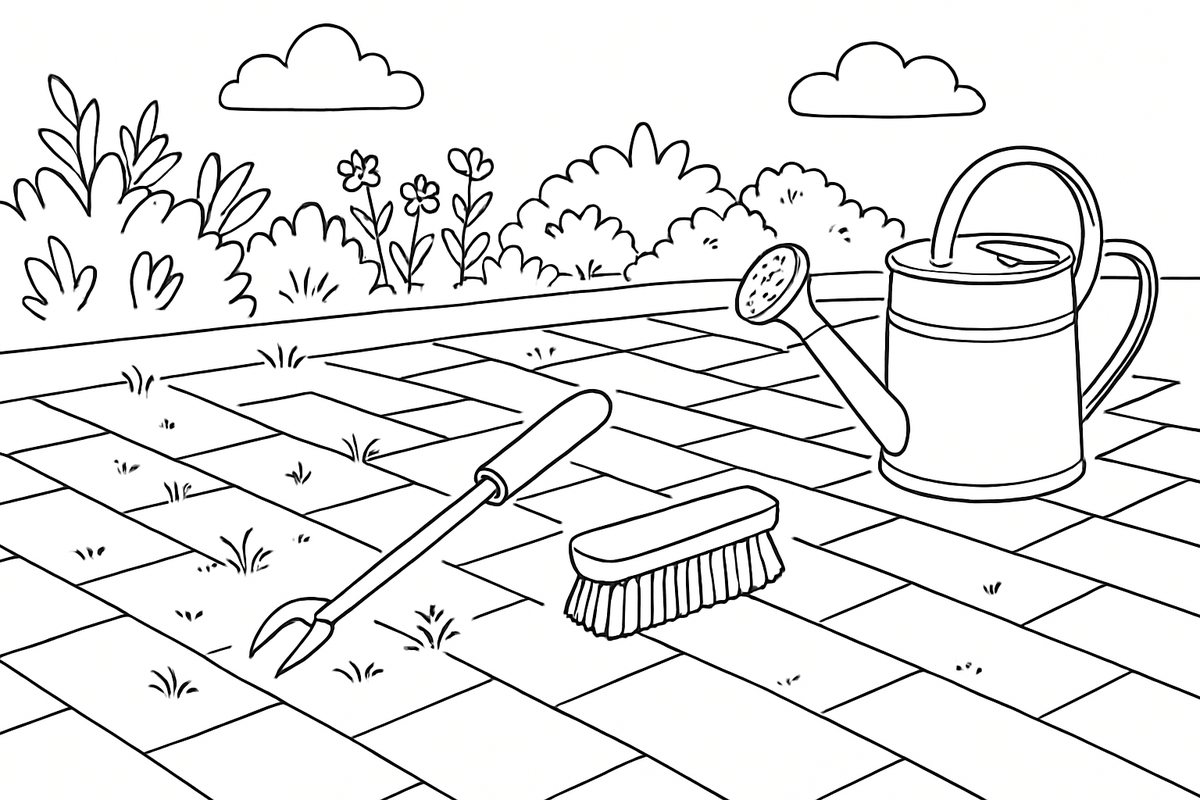
- Dig out weeds and moss. Rake weeds and moss clumps out of the joints with an old kitchen knife or a proper block-paving weeding tool. Lifting the roots now gives a cleaner finish that holds up for longer.
- Shield your planting. Before using any product, soak the soil in nearby borders and lawn edges and cover fragile plants, since run-off can scorch leaves.
Time it well, too. A dry, mild, overcast day is the sweet spot: the surface still dries afterwards, but the cleaner won't flash off in hot sun before it has done its job. Late spring and early autumn are natural windows for it.
How to clean a patio without a pressure washer
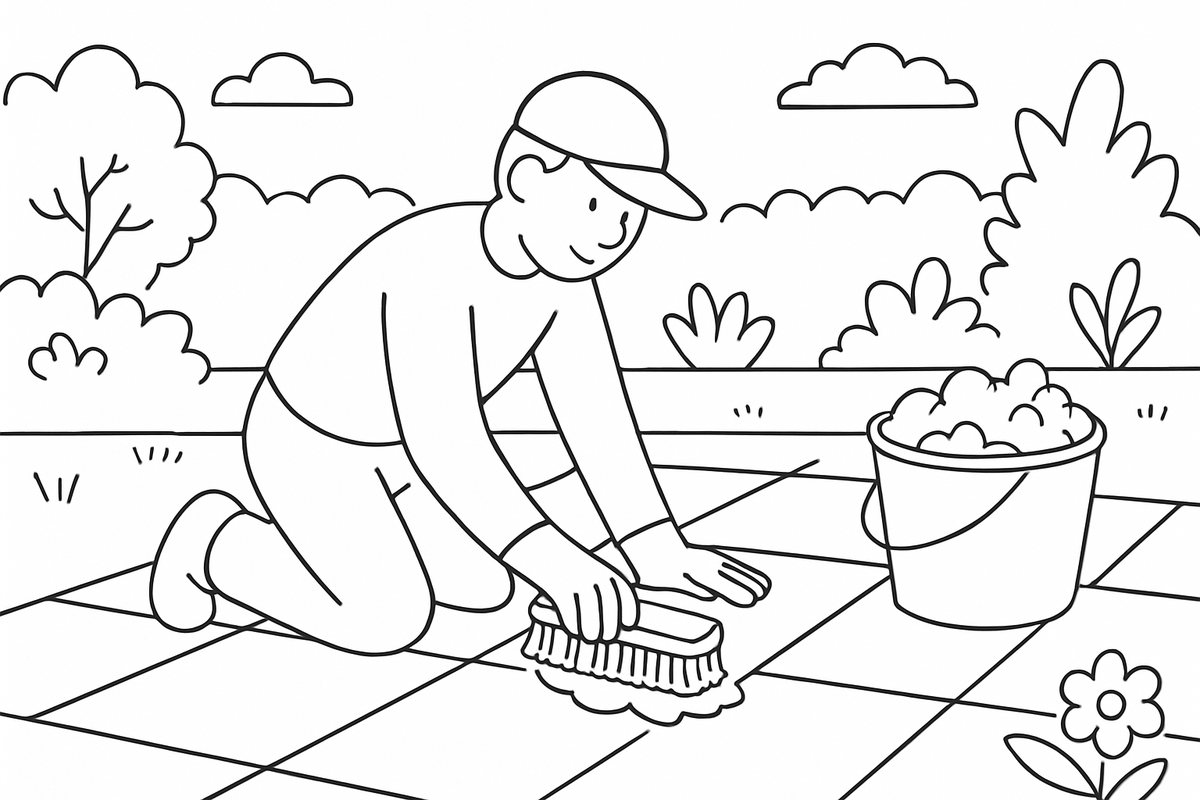
You really can get a first-rate result without any powered kit. A bucket of hot, soapy water, a stiff brush and a bit of graft will lift far more grime than most people expect, and this hands-on approach is much gentler on older slabs, pointing and jointing sand than a high-pressure jet.
The plain soapy-water method
- Half-fill a bucket with warm water and add a good squeeze of washing-up liquid.
- Work across the patio in manageable sections, tipping or brushing the solution onto the slabs.
- Scrub hard with a stiff-bristled brush, following the run of any grooves or riven texture in the stone.
- Rinse each section with clean water from a watering can or hose before the solution dries on.
For everyday dirt and light grime, that alone usually does it. Anything more entrenched calls for a dedicated cleaner or one of the homemade mixes below.
Homemade patio cleaners that actually pull their weight
- White vinegar. Cut roughly half-and-half with water, it handles light algae and general film. Wet the area, leave it 20 to 30 minutes, then scrub and rinse. It's cheap and mild, though nowhere near as mighty as the internet likes to claim.
- Bicarbonate of soda. Mixed into a stiff paste, it's useful for drawing out greasy patches and oil marks. Rub it in, give it a few minutes, then scrub away.
- Soda crystals. Dissolved in hot water, these are one of the better-value ways to cut through ground-in dirt on concrete and stone, and noticeably stronger than vinegar.
These are fine on most concrete, sandstone and slate. On glazed porcelain you'll rarely need them, since a plain wash usually brings it up.
How to use a pressure washer without wrecking your slabs
A pressure washer is fast, even and hard to beat on a big driveway or heavily soiled paving. Used carelessly, though, it will flay the surface off softer stone, fire jointing sand out from between blocks and even pit concrete. Handle it with a bit of caution.
Doing it properly
- Trial a hidden corner first to see how the surface responds before you commit to the whole patio.
- Fit a fan or rotary nozzle, never a pinpoint jet. A tight, concentrated stream will carve into anything soft.
- Keep the lance moving and hold the nozzle roughly 20 to 30cm off the surface at a steady angle, so you don't leave pale stripes where you paused.
- Work in a single direction and drive the dirty water and debris ahead of you towards a drain or gully.
- Ease off on old or loose paving. If the pointing is crumbling or slabs already rock, pressure washing can loosen them further, so clean those areas by hand.
Which surfaces take pressure washing?
Concrete slabs, most block paving and porcelain generally cope with it well. Softer natural stone such as Indian sandstone or limestone wants a lighter touch and a wider spread. Once you've pressure-washed block paving, expect to top up the joints with fresh kiln-dried sand, brushed in after the surface has fully dried, otherwise the blocks can creep and weeds return sooner.
Beating algae, moss, lichen and black spots
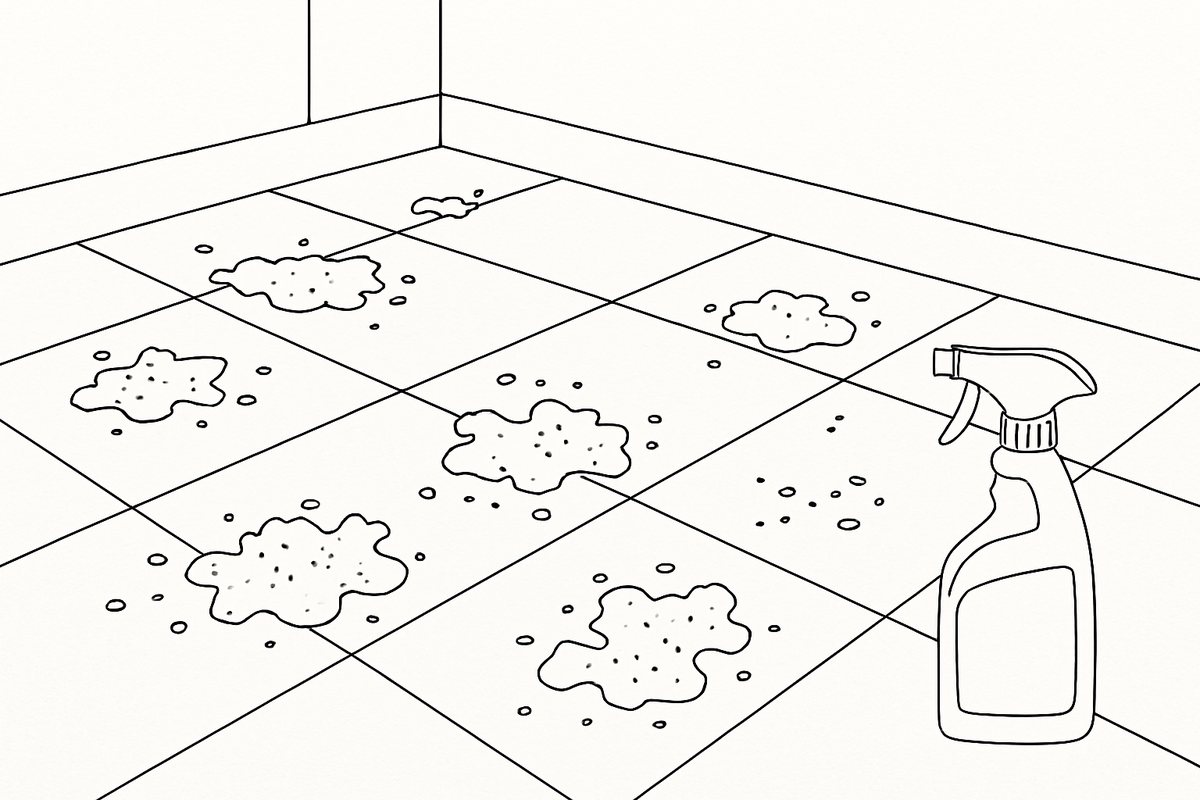
These living growths are the real reason most patios look neglected, and each one needs handling a little differently.
Green algae and mould
That slick green film is algae, and it loves shade and damp, exactly what a sheltered corner offers through a long Cambridgeshire winter. A patio cleaner containing a biocide, or a correctly diluted sodium hypochlorite solution, kills the growth outright rather than just rinsing the top layer away. Apply it, leave it for the time the label states, then rinse. Because it deals with the living organism instead of only the visible bloom, this kind of treatment tends to hold a clean finish for longer than a jet wash used on its own.
Moss
Scrape off the bulk of it first, then treat whatever remains with a moss killer or biocidal cleaner. Clearing the roots out of the joints is the part that counts, because moss left sitting in the gaps simply creeps back within a few weeks.
Lichen and black spots
Those dark, crusty specks fused to natural stone are lichen, and they're the most obstinate problem on the list. There's no overnight cure: a purpose-made black-spot remover, applied and left to work over days, sometimes across more than one round, is what's usually needed. Scrubbing on its own rarely clears them fully, so patience wins over brute force.
A note on bleach and sodium hypochlorite: it works, but it's strong stuff. Always dilute it exactly as directed, wear gloves and eye protection, keep it well off your beds and lawn, and never combine it with other cleaning products.
Mistakes that quietly cause damage
- Don't lean on neat household bleach or laundry powder as a shortcut. Results are hit and miss, and salts in some products can leave a chalky white bloom or harm nearby plants.
- Don't park a pressure washer jet on one spot. It leaves a permanent mark and drives water under the slabs.
- Don't clean in freezing weather. Water trapped in the joints can freeze, expand and pop the pointing out.
- Don't forget to re-sand block paving after washing, since empty joints invite weeds and let the blocks shift.
- Don't seal a damp or dirty patio. A sealer will lock moisture and dirt underneath, which looks worse over time and can make the surface fail.
Should you reseal once it's clean?
Sealing isn't compulsory, but on the right surface it makes future cleans far easier and keeps the colour looking rich. A good sealer shrugs off stains and slows the return of algae and weeds. If you do seal, only do it once the patio is spotless and bone dry, which is often several days after washing. Different materials need different products, so it pays to read up before buying; our guide on how to seal a patio and block paving runs through the choices and whether it's worth the effort for your surface. If your paving looks worn beyond what a clean can rescue, our overview of cleaning block paving and removing weeds covers bringing driveways and paths back too.
What does professional patio cleaning cost?
If a weekend on your knees doesn't appeal, hiring a professional is affordable and the finish is reliably even. As a rough guide, patio and driveway cleaning in the UK tends to land somewhere around £3 to £6 per square metre, shifting with the surface material, how filthy it is, and whether re-sanding or sealing is bundled in. Bigger areas usually come out cheaper per square metre. Always get a proper quote for your own patio rather than banking on a headline figure.
Bringing in a pro also makes sense when the paving is very large, deeply stained with lichen, or when you'd rather not gamble on softer stone with a pressure washer you've never handled before.
Keeping your patio clean for longer
- Sweep often, so leaves and debris don't rot down into staining muck.
- Hit algae and moss the moment you see green appearing, rather than waiting for it to take over.
- Keep gutters and drainage clear so water isn't left pooling on the paving.
- Trim back overhanging shrubs to let more light and air reach shady slabs.
- Consider sealing hard-wearing surfaces to slow regrowth.
A well-laid patio with a proper fall and decent drainage stays cleaner from the outset; poor drainage is often the hidden reason paving greens up so fast. If you're planning a new patio or a driveway, our decking, patio and paving services cover the whole job, built to last.
If your patio, path or driveway needs more than a clean can fix, or you'd simply like it sorted properly by a local team, 1st Builders Cambridge works across Cambridge and the wider East Anglia region. Get a free, no-obligation quote today, or call us on 01223 912222 for straightforward, friendly advice.
Frequently asked questions
What is the best thing to clean a patio with?
For everyday grime, warm water with washing-up liquid and a stiff-bristled brush works well and is kind to your slabs. For algae, moss and black spots you'll get a better, longer-lasting finish from a dedicated patio cleaner containing a biocide, which kills the growth rather than just rinsing the surface.
How do I clean a patio without a pressure washer?
Sweep the patio, dig weeds and moss out of the joints, then scrub with hot soapy water and a stiff brush, working in sections and rinsing before it dries. Homemade options like white vinegar, soda crystals or a bicarbonate-of-soda paste handle light algae and greasy marks, while a dedicated biocidal cleaner deals with heavier algae and moss.
How do I get rid of green algae and black spots on my patio?
Green algae responds well to a patio cleaner containing a biocide or a correctly diluted sodium hypochlorite solution: apply, leave as directed, then rinse. Black spots are lichen and far more stubborn, so use a purpose-made black-spot remover left to work over time, sometimes across more than one application. Always dilute chemicals exactly as directed and protect nearby plants.
Will a pressure washer damage my patio?
It can if you're careless. A concentrated pinpoint jet held in one place can gouge soft stone, pit concrete and blast jointing sand out of block paving. Use a fan or rotary nozzle, keep it moving about 20 to 30cm from the surface, and test a corner first. Softer stone like sandstone needs a lighter touch, and block paving usually needs re-sanding with kiln-dried sand afterwards.
How much does it cost to have a patio professionally cleaned in the UK?
As a rough guide, professional patio and driveway cleaning tends to cost around £3 to £6 per square metre, depending on the material, how dirty the surface is, and whether re-sanding or sealing is included. Larger areas often work out cheaper per square metre, so always get a quote for your specific patio rather than relying on a headline figure.
Should I seal my patio after cleaning it?
Sealing isn't essential, but on suitable surfaces it makes future cleaning easier and keeps colours looking rich while slowing the return of algae and weeds. Only ever seal a patio that is completely clean and fully dry, often several days after washing, since sealing over damp or dirty paving traps moisture and dirt underneath.