A well-kept deck is one of the best places to relax on a warm East Anglian evening. Left to fend for itself, though, timber greys off, turns slippery in the damp, and can start to split and cup. The reassuring news is that keeping it in good order is mostly straightforward seasonal work, and once you understand the difference between a decking oil and a stain, most of the guesswork disappears.
This guide covers how to clean decking properly, how to tackle the green algae that makes boards treacherous underfoot, and how to choose between oil, stain and paint so your finish lasts. It applies whether you have softwood, hardwood or composite boards.
Why decking needs regular maintenance
Outdoor timber leads a hard life. Rain soaks in and dries out, UV bleaches the colour away, and the shady, damp conditions common in a British garden are exactly what algae and mould thrive on. Without a protective finish, water works into the grain, the boards swell and shrink, and over a few seasons you end up with raised grain, surface cracks and that tired silver-grey look.
Regular care does three jobs at once: it keeps the surface clean and safe to walk on, it feeds and protects the wood so it does not dry out and crack, and it holds the colour. A deck that is cleaned each spring and re-oiled when it needs it can comfortably last well over a decade. One that is neglected often needs replacing far sooner.
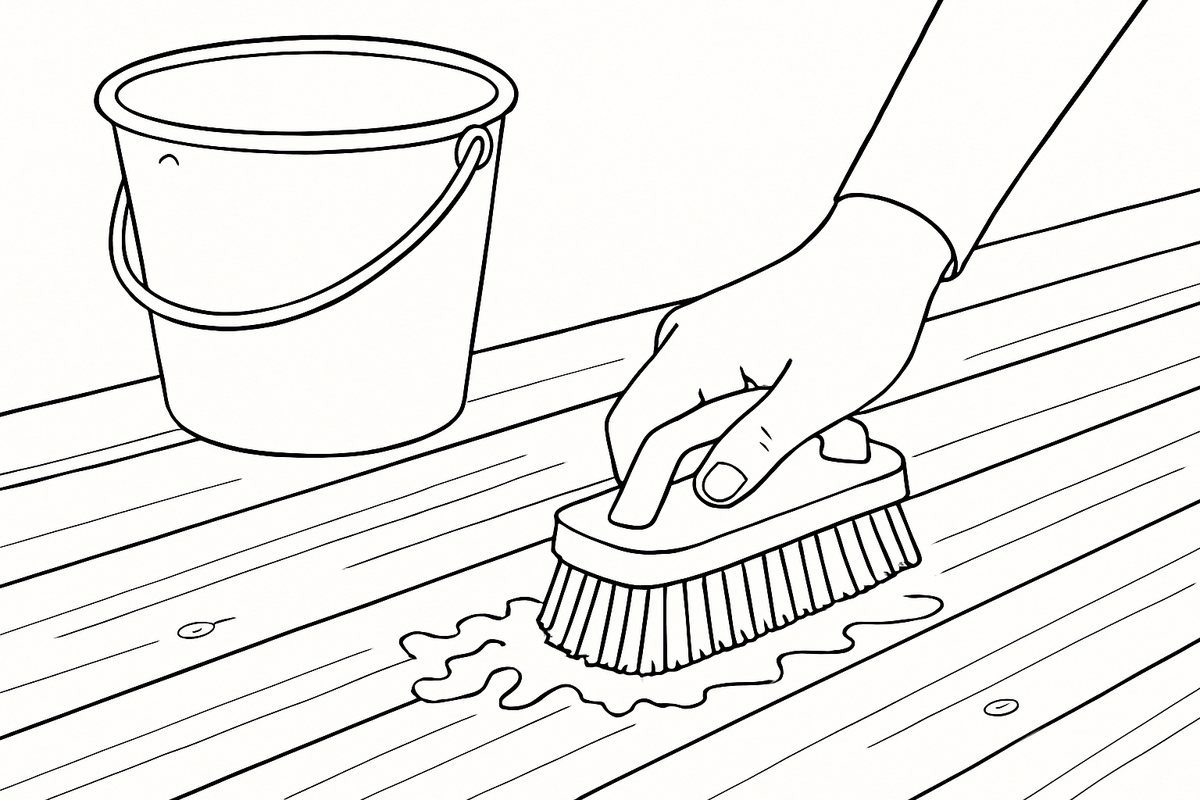
How to clean decking, step by step
Cleaning is the foundation of all decking care. There is no point oiling or staining over dirt, algae and old flaking finish, because the fresh coat will not bond to it. Pick a dry, mild spell, ideally in spring or early autumn.
1. Clear and sweep the boards
Move furniture, pots and the barbecue off the deck. Sweep it thoroughly, then use a stiff brush or a paint scraper to rake out the grooves and the gaps between boards, where wet leaves and grime collect. Clearing those gaps also helps the deck drain and dry, which is half the battle against algae.
2. Wash with a proper deck cleaner
For everyday grime, warm water with a little washing-up liquid and a stiff broom lifts a surprising amount. Where a deck has gone green or black, a dedicated decking cleaner is far more effective, because it is formulated to kill algae, mould and lichen rather than just move them around. Work along the length of the boards, following the grain, and give the product the contact time stated on the tin before rinsing.
Steer clear of neat household bleach. It can lighten the timber unevenly, harm nearby planting and lawn, and does little to stop regrowth. A garden-safe deck cleaner or a diluted fungicidal wash is the safer choice.
3. Should you pressure wash?
A pressure washer shifts algae quickly, but it is easy to do real damage. Too much pressure gouges soft timber, raises the grain and drives water deep into the boards. If you do reach for one:
- Keep it on a low or medium setting and fit a fan nozzle, never a pinpoint jet.
- Hold the lance around 20 to 30cm from the surface and keep it moving.
- Always work along the grain, following the length of each board.
- Let the deck dry out fully afterwards, as the wood will have taken on water.
Composite boards tolerate pressure washing better, but still follow the manufacturer's stated maximum pressure. The same careful, along-the-grain approach we set out in our guide to cleaning a patio works for decks too.
4. Rinse and dry
Rinse off all the cleaner with clean water, then let the deck dry completely, which usually means a couple of dry days. Oil and stain must go onto bone-dry timber, so never rush this stage.
Dealing with green algae and slippery boards
Slippery decking is the single most common complaint, and it is a genuine safety issue. The culprit is almost always a thin film of algae that thrives in shade and damp. To keep it in check:
- Clean seasonally with a fungicidal deck cleaner, which kills the algae rather than smearing it around.
- Improve airflow and light where you can, cutting back overhanging shrubs so the deck dries faster after rain.
- Keep the gaps between boards clear so water drains away instead of sitting on the surface.
- For a deck that is persistently slippery, look at anti-slip decking strips or an anti-slip oil, or swap the worst boards for grooved or composite ones that grip better underfoot.
A finish containing a biocide or algae inhibitor slows regrowth, but no coating makes a deck permanently self-cleaning. Regular sweeping and an annual wash remain the most reliable defence.
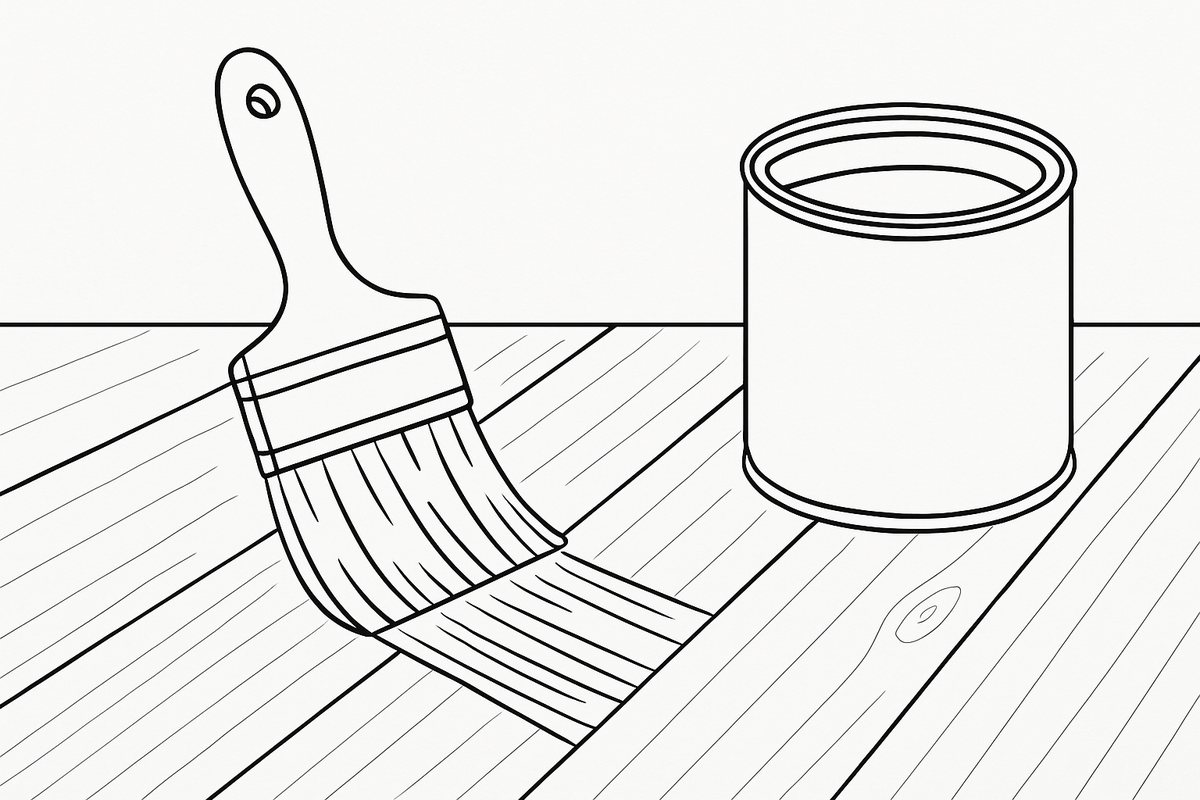
Decking oil vs stain vs paint: what is the difference?
This is where most people get stuck, so here is the plain-English version. All three protect the wood, but they behave differently and give a different look.
Decking oil
Decking oil soaks into the timber rather than sitting on top. It tops up the natural oils the wood loses to weathering, keeping the boards supple so they are less likely to crack, split or cup. It leaves a natural, low-sheen finish that shows off the grain, and because it penetrates rather than forming a film, it does not peel or flake. As it wears it simply fades, so recoating is easy with no heavy sanding. That is why oil is the default finish for most timber decks.
Oils come clear or tinted. A clear oil lets the wood grey off gently over time, while a pigmented oil adds colour and, importantly, UV protection, since the pigment shields the timber from the sun that bleaches it.
Decking stain
A decking stain is more about colour, and it often forms a light film on the surface as well as adding pigment. Stains generally deliver stronger, longer-lasting colour and good UV resistance, and a solid-colour stain can transform tired boards. The trade-off is that film-forming stains can wear thin in high-traffic spots, which may mean more preparation when you recoat. Some products are sold as oil-stain hybrids that aim to combine the penetration of an oil with the colour of a stain.
Decking paint
Paint gives the boldest colour change and the thickest protective film, and it hides worn, mismatched boards well. The catch is that paint sits entirely on the surface, so it can chip, flake and peel, and once it starts to fail you usually have to strip or sand it back before repainting. On a busy deck that is a lot of work, which is why paint tends to suit balustrades, risers and decorative edges more than the main walking surface.
As a rule of thumb: choose oil for a natural, low-maintenance timber deck, a stain when you want lasting colour, and paint only where you want a bold, solid finish and can accept more upkeep.
How to oil decking properly
Once the deck is clean and fully dry, oiling is genuinely satisfying work. Choose a dry, mild day with no rain forecast for at least 24 to 48 hours, and avoid oiling in strong direct sun, which makes the oil dry too fast to soak in evenly.
- Prepare and mask. Check the boards are dry and free of old flaking finish. Lightly sand any rough, furry patches along the grain, then protect adjacent walls, edging and planting.
- Stir, do not shake. Stir the oil well to blend the pigment, and stir again now and then as you work so the colour stays consistent.
- Apply thin coats along the grain. Use a brush, roller or pad and work along the full length of each board, coating a few boards at a time to keep a wet edge and avoid overlap marks. Thin, even coats beat one thick one every time.
- Wipe off any excess. With penetrating oils, wipe away oil that has not soaked in after the time stated on the tin, otherwise it stays tacky.
- Recoat if needed. Most decks benefit from two coats. Follow the drying time on the tin before the second coat, and before letting furniture or feet back on.
Do not forget the exposed end grain and board ends. These soak up water fastest and are where rot often takes hold first.
How often should you re-oil or re-stain decking?
There is no single figure, because it depends on the product, the timber, how much sun and rain the deck gets and how much use it sees. As a realistic guide:
- Decking oil: often once a year, and sometimes twice on a well-used or south-facing deck. A quick test is to splash a little water on the boards. If it beads, the protection is holding; if it soaks straight in and darkens the wood, it is time to re-oil.
- Decking stain: typically every two to four years, depending on the product and exposure, as the colour and film last longer than a bare oil.
- Paint: variable, but expect to touch up chips and worn areas most years and to repaint every few years.
The reassuring part with oil is that maintenance coats are easy. Clean the deck, let it dry, and brush on a fresh coat, with no stripping or heavy sanding required.
Timber vs composite decking maintenance
The finish choices above all apply to timber. Composite (wood-plastic) boards are a different story, and that lighter upkeep is a big reason people choose them.
- Timber decking needs cleaning at least once or twice a year, plus periodic oiling or staining to stay protected and looking its best. In return you get a natural material that can be recoloured and refreshed as often as you like.
- Composite decking never needs oiling, staining or sealing. Maintenance is essentially cleaning: a regular sweep and an occasional wash with warm soapy water or a composite deck cleaner to keep algae at bay. It will not rot or splinter, though cheaper boards can fade a little in the first year or two.
Never apply decking oil or stain to composite boards. It will not soak in, cannot bond to the plastic content, and simply leaves a sticky, patchy mess. If you are still weighing up which to install, our guide to composite vs timber decking compares cost, lifespan and upkeep in detail.
A simple year-round decking routine
You do not need to fuss over a deck constantly. A light seasonal rhythm keeps it in great shape:
- Spring: give the deck a full clean, check for loose boards or protruding screws, and re-oil or re-stain if the water no longer beads.
- Summer: sweep regularly, wipe up spills promptly, and stand pots on feet so water does not sit and mark the boards.
- Autumn: clear fallen leaves and debris quickly, especially from the gaps, as rotting leaf matter feeds algae and traps damp against the wood.
- Winter: keep the surface clear of standing water, leaves and snow to reduce slip risk and protect the timber through the wettest months.
When to call in a professional
Plenty of decking care is well within reach for a confident DIYer. It is worth bringing in a professional when the job goes beyond routine upkeep: heavy restoration of a badly weathered deck, machine sanding to strip an old paint or failed film finish, structural repairs to the frame or joists, or where slippery boards have become a genuine safety concern. A professional can also advise on the right finish for your particular timber and aspect, and get an even, long-lasting result on a large or awkward deck. If you are planning a brand-new deck rather than reviving an old one, start with our guide on how to build garden decking.
Get expert help with your decking
Whether you want a tired deck brought back to life or a new one built to last, our team can help. We install, restore and maintain timber and composite decking across Cambridge and East Anglia as part of our decking, patio and paving services. For friendly, honest advice, get a free quote or call 1st Builders Cambridge on 01223 912222.
Frequently asked questions
Is decking oil or stain better?
It depends on the look and upkeep you want. Decking oil soaks into the timber, feeds it so it is less likely to crack, and gives a natural low-sheen finish that fades rather than peels, which makes recoating easy. A decking stain focuses on colour, usually lasts longer between coats and offers strong UV protection, but film-forming stains can wear in busy areas and need more preparation when you recoat. Oil suits most natural timber decks; a stain is best when you want lasting colour.
How often should I oil my decking?
For most timber decks, once a year is a good baseline, though a heavily used or south-facing deck may need it twice. The simplest test is to splash water on the boards: if it beads, the finish is still protecting the wood; if it soaks straight in and darkens the timber, it is time to clean and re-oil.
Can I use decking oil on composite decking?
No. Composite (wood-plastic) boards do not absorb oil or stain, so the product cannot bond and simply leaves a sticky, patchy residue. Composite decking is designed to be low-maintenance: keep it clean with a sweep and an occasional wash using warm soapy water or a composite deck cleaner, and skip oil, stain and sealant entirely.
How do I stop my decking being slippery?
Slippery boards are usually caused by a thin film of algae. Clean the deck seasonally with a fungicidal decking cleaner, keep the gaps between boards clear so water drains, and cut back overhanging plants so the surface dries faster. For persistent problems, consider anti-slip decking strips, an anti-slip oil, or swapping the worst boards for grooved or composite ones that grip better.
Should I pressure wash my decking?
You can, but carefully. Use a low or medium pressure with a fan nozzle, keep the lance moving and around 20 to 30cm from the surface, and always work along the grain. Too much pressure gouges soft timber, raises the grain and drives water deep into the boards. Let the deck dry fully before applying any oil or stain.
Do I need to clean decking before oiling it?
Yes, always. Oil and stain will not bond over dirt, algae or old flaking finish. Clear and sweep the deck, wash it with a proper deck cleaner, rinse well, and let it dry completely, usually a couple of dry days. Only then should you apply oil or stain to the bone-dry timber.