Standing in a garden centre or scrolling through supplier websites, it is easy to feel swamped by paving slabs. Porcelain, sandstone, limestone, granite, concrete — every material claims to be the best, and prices swing wildly for what look like near-identical squares. The honest answer is that there is no single "best" slab. There is only the right slab for your garden, your budget and the amount of upkeep you are genuinely willing to do.
This guide walks through the main types of paving slab used across UK gardens, patios and driveways, weighing each on looks, durability, cost, slip resistance and maintenance. By the end you should know which material suits your project — and the questions worth asking before you buy a single pack.
The main types of paving slab
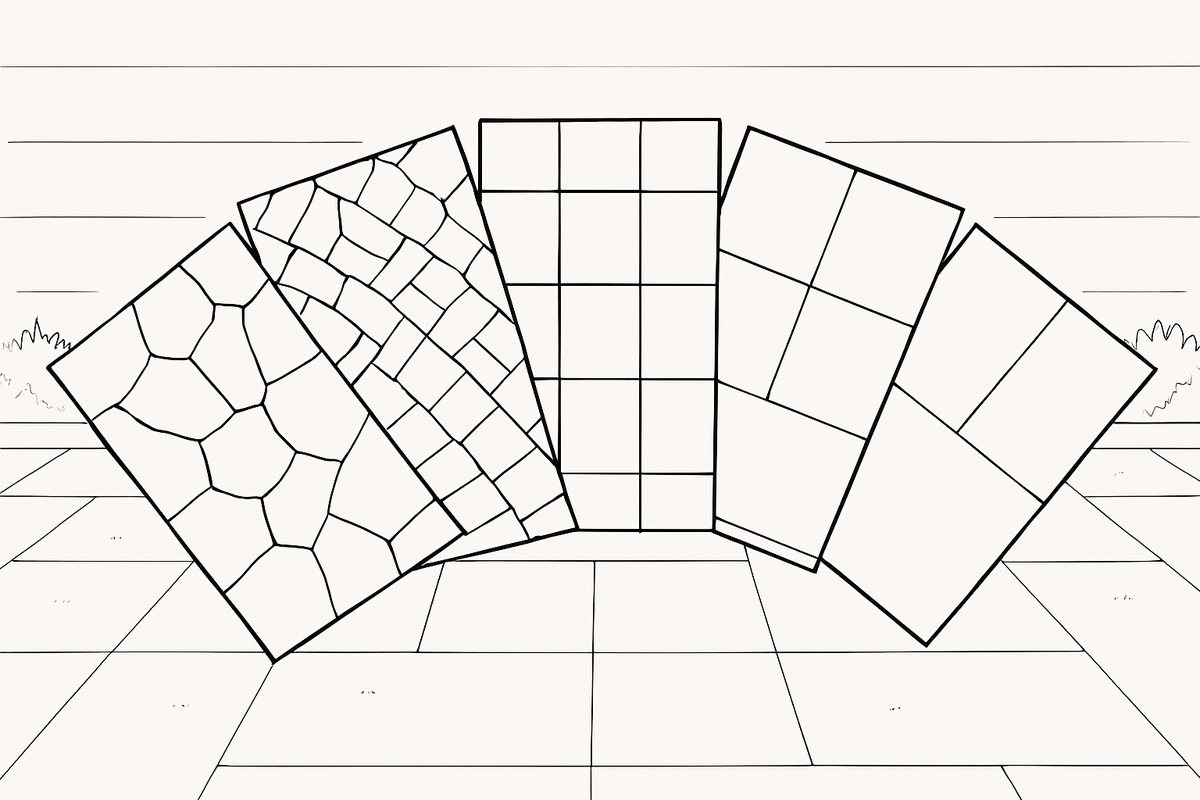
Nearly every patio slab on the market belongs to one of two families: natural stone, which is quarried from the ground and cut to size, or manufactured slabs such as porcelain and concrete, which are made in a factory. Each behaves very differently underfoot and over time.
- Natural stone — sandstone, limestone, granite, slate and Yorkstone. Every slab is unique, with natural colour variation and either a riven (textured) or sawn surface.
- Porcelain — fired clay tiles that are dense and almost non-porous, usually 20mm thick for outdoor use.
- Concrete — cast slabs, ranging from plain utility paving to higher-end versions moulded and coloured to mimic natural stone.
We look at each in turn below, then bring it together so you can compare like for like.
Porcelain paving slabs
Porcelain has become the default choice for modern patios, and for good reason. Because it is fired at very high temperatures, it ends up extremely hard, almost completely non-porous and highly resistant to stains, frost and fading.
Pros
- Very low maintenance — it barely absorbs water, so algae, moss and oil struggle to take hold. A wash with warm soapy water usually keeps it looking new.
- Colour-stable — the colour is fired in and will not fade in sunlight the way some stone can.
- Consistent and contemporary — slabs are uniform in size and shade for a crisp finish, and many convincingly imitate stone, timber or concrete.
- No sealing needed — unlike natural stone, porcelain never requires a sealant.
Cons
- Trickier to lay — the dense back face means each slab must be fixed with a slurry primer, or it can work loose. This is where many DIY porcelain patios come unstuck.
- Higher material cost, and it needs cutting with a diamond blade.
- Can look too flawless for a period or cottage-style garden.
As a rough guide, porcelain slabs tend to cost around £30–£60 per m² for the material, with premium ranges higher. If porcelain appeals, our dedicated porcelain paving guide covers installation and cost in far more detail.
Natural stone paving slabs
Natural stone brings warmth, texture and genuine character that manufactured slabs work hard to copy. No two pieces are identical, which is precisely the appeal for many homeowners. The trade-off is that most natural stone is porous and asks for a little more care.
Indian sandstone
Comfortably the most popular natural stone in the UK, thanks to its affordability and warm spread of earthy colours — Kandla grey, buff, raj green and autumn browns. Its naturally riven surface grips well underfoot and suits traditional and cottage gardens beautifully.
- Good value — typically the most affordable natural stone.
- Porous — it absorbs water and can weather or grow algae if neglected, so sealing is worth considering.
- Colour variation — charming to some, uneven to others; order from a single batch where you can.
Limestone
A more uniform, smoother alternative to sandstone, usually in blue-grey or near-black tones. It reads as cleaner and slightly more contemporary than riven sandstone while still being genuine stone.
Granite
The toughest of the natural stones — exceptionally hard, dense and durable, with a subtle flecked appearance. Granite costs more and is heavier to handle, but it excels in high-traffic areas and holds its colour well.
Slate and Yorkstone
Slate offers rich, dark tones and a fine texture, though it can flake over the years. Traditional Yorkstone is prized for period properties but sits firmly at the premium end of the price scale.
As a rough guide, sandstone and limestone tend to run around £25–£55 per m², rising to roughly £45–£90 per m² or more for granite and genuine Yorkstone.
Concrete paving slabs
Concrete is the workhorse of UK paving. Manufacturing has moved on a long way from the plain grey squares of old, and the better ranges are moulded and coloured to mimic riven stone at a fraction of the price.
Pros
- The most budget-friendly option, particularly over larger areas.
- Consistent sizing makes it straightforward to set out and lay.
- Widely stocked in packs at any builders' merchant or DIY store.
Cons
- Can fade — pigments dull over the years, and on cheaper slabs the colour sits only in the top layer.
- Less character — repeating moulds mean the same "natural" pattern reappears if you look closely.
- Shorter lifespan than stone or porcelain, and it can chip or crack under heavy loads.
As a rough guide, concrete slabs tend to cost around £15–£35 per m², making them the natural starting point for value-led projects.
Slab size, thickness and finish
Material is only half the decision. Size and finish change the whole feel of a patio.
- Large-format slabs (600x900mm and up) give a clean, open, modern look with fewer joints. They are heavy and need a very flat, well-prepared base.
- Smaller and mixed-size packs suit traditional layouts and awkward corners, and are far easier to handle single-handed.
- Thickness follows the job: 20mm porcelain and 18–22mm sandstone are standard for patios, while driveways need thicker, load-rated paving or block paving.
- Finish — riven and textured surfaces grip underfoot, whereas smooth sawn or polished finishes look sharp but turn slippery when wet.
Slip resistance and safety
Any smooth, wet slab can be slippery, so slip resistance deserves real thought — especially by a door, near a pool, or on a shaded patio prone to algae. Riven natural stone and textured, grip-finish porcelain are the safest bets underfoot. Polished granite and smooth concrete look wonderful but demand more care and more frequent cleaning to stay safe.
Whatever you choose, the real slip hazard is a build-up of algae and moss, and that comes down to upkeep. Our guide on how to clean a patio explains how to remove green film and black spots safely, with and without a pressure washer.
Comparing the options at a glance
Bringing it together, here is how the main materials stack up:
- Best for low maintenance: porcelain — no sealing, stain-resistant, wipes clean.
- Best for natural character: Indian sandstone and Yorkstone — warm, riven and full of variation.
- Best for durability: granite and porcelain — hard-wearing and long-lived.
- Best for tight budgets: concrete — lowest cost per m² and widely stocked.
- Best modern look: large-format porcelain or smooth limestone.
How to choose the right paving slabs
To narrow the field quickly, ask yourself a handful of honest questions:
- What is the style of your home and garden? Period cottage or contemporary extension? Match the slab to the setting, not just the showroom photo.
- How much upkeep will you actually do? If the honest answer is "as little as possible", lean towards porcelain. If you enjoy a little seasonal maintenance and want natural texture, stone rewards you.
- What is the area for? A quiet seating patio has different needs from a busy family path or a driveway. Loads, footfall and slip risk all steer the choice.
- What is your total budget? Factor in the base, mortar, edging, cutting, any sealing and labour — not just the slabs. Cheap slabs on a poor base cost more in the long run.
- Can you see and handle a sample first? Colours look very different wet, dry and in real daylight, so always get a sample before committing to a large order.
Buying and laying: a few practical tips
- Order around 10% extra to cover cuts, breakages and future repairs, ideally from the same batch so colours stay consistent.
- Never skimp on the sub-base. Most failed patios fail underneath, not on top; a properly compacted sub-base and the right mortar bed do more for longevity than the slab itself.
- Consider sealing natural stone. It reduces staining, slows algae and keeps colours richer. Porcelain never needs it.
- Mind the drainage. Lay slabs with a slight fall away from the house so water runs off rather than pooling.
Laying paving well is genuinely skilled work — getting the levels, falls, base and jointing right is what separates a patio that lasts decades from one that lifts and cracks after a couple of winters. A small path can be a satisfying DIY project, but for a large patio, a porcelain installation, or anything load-bearing like a driveway, it is usually worth bringing in a professional. Inadequate sub-bases and poor porcelain fixing are the two most common — and most expensive — faults we are called out to put right.
Get expert help with your paving project
Choosing the right slab is the first step; laying it properly is what makes it last. If you would like a hand deciding between porcelain, natural stone and concrete — or you would rather leave the graft to an experienced team — 1st Builders Cambridge can help. We handle everything from patios and paths to driveways across Cambridge and East Anglia. Explore our decking, patio and paving services, or get a free, no-obligation quote by calling 01223 912222. We are always happy to talk through your options with no pressure.
Frequently asked questions
What is the best type of paving slab for a UK patio?
There is no single best slab — it depends on your priorities. For the lowest upkeep, porcelain is hard to beat because it resists stains, algae and fading and never needs sealing. For natural warmth and character on a modest budget, Indian sandstone is the most popular pick. For maximum durability, granite or porcelain lead. Match the material to your garden's style, how the area will be used and how much maintenance you are realistically willing to do.
Are porcelain paving slabs better than natural stone?
Porcelain and natural stone are simply different. Porcelain is denser, near non-porous, virtually maintenance-free and colour-stable, but it is trickier and more costly to lay because each slab must be fixed with a slurry primer. Natural stone offers unique, characterful looks that many people prefer, though it is porous and benefits from occasional sealing and cleaning. Neither is objectively better — it comes down to the look you want and the upkeep you will actually do.
How much do paving slabs cost per square metre?
As a rough guide, concrete slabs tend to start around £15–£35 per m², Indian sandstone and limestone around £25–£55 per m², porcelain around £30–£60 per m², and granite or genuine Yorkstone from roughly £45–£90 per m² or more. These are material costs only, so remember to budget for the sub-base, mortar, edging, cutting, any sealing and labour, which often add significantly to the total.
Do paving slabs need sealing?
It depends on the material. Porcelain never needs sealing because it barely absorbs water. Natural stone such as sandstone and limestone is porous, so sealing is worth considering — it reduces staining, slows algae growth and keeps colours richer, though it is not strictly essential. Concrete slabs can also be sealed to help preserve their colour.
Which paving slabs are least slippery?
Riven natural stone, such as textured Indian sandstone, and grip-finish porcelain offer the best slip resistance underfoot. Smooth and polished surfaces like polished granite or sawn slabs look sharp but can be slippery when wet. Whatever the material, the biggest slip hazard is a build-up of algae and moss, so regular cleaning matters as much as the finish you choose.
Can I lay paving slabs myself or should I hire a professional?
A small, simple path can be a rewarding DIY job. However, a large patio, a porcelain installation, or any load-bearing area such as a driveway is usually best left to a professional. Getting the sub-base, falls, mortar bed and jointing right is skilled work, and porcelain in particular needs a slurry primer to bond properly. Poor bases and incorrect porcelain fixing are among the most common — and most expensive — DIY mistakes to put right.